The tradition, in plain words
Digestion is the subject the classical Indian medical literature returns to most often. Its central concept, agni, is usually translated as 'digestive fire' — a metaphor the texts use for the body's handling of food, not an anatomical claim.
Triphala — literally 'three fruits' — is the single most repeated formula in that literature: amalaki, bibhitaki and haritaki, dried and ground together. It appears in Charaka, in Suśruta, and in nearly every formulary after them, usually taken with warm water.
Ginger appears across all the traditions we index — Indian, Chinese, Greek and Arabic — almost always as a warming preparation taken near a meal. Licorice root appears in the same position in both the Chinese materia medica and the European herbals.
A simple day
- 1Warm water or ginger tea in the morning.
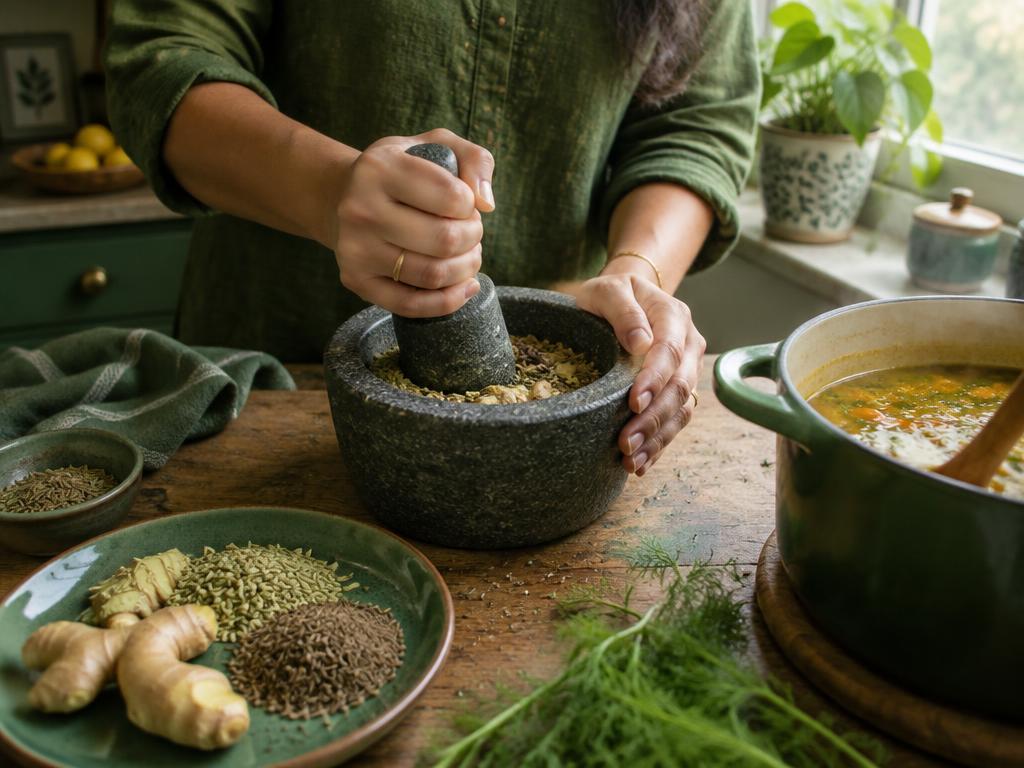
- 2Cook with cumin, fennel and ginger, as many home kitchens do.
- 3Eat the main meal at midday, sitting down.
- 4Chew a few fennel seeds after eating, an old habit across India.
Please be careful
- • The classical texts record triphala as unsuitable during pregnancy. Modern labels agree.
- • Whole licorice root affects blood pressure and potassium; this is why the deglycyrrhizinated form exists. Anyone monitoring blood pressure should read the label and ask a clinician.
- • Persistent digestive change is a reason to see a clinician, not a reason to read a manuscript.
This page shares what old texts record. It is not medical advice and makes no promise about results. Talk to your doctor before trying something new.
Check where this comes from
- Charaka's Compendium [Charaka Saṃhitā]Cikitsāsthāna 15 — on digestion · compiled c. 100 BCE – 200 CERecord: APX-PSI-CS-15-0021 ↗
- The Divine Farmer's Materia Medica [Shénnóng Běncǎo Jīng]Upper class of herbs — licorice root · compiled c. 200–250 CERecord: APX-PSI-SB-UC-0009 ↗